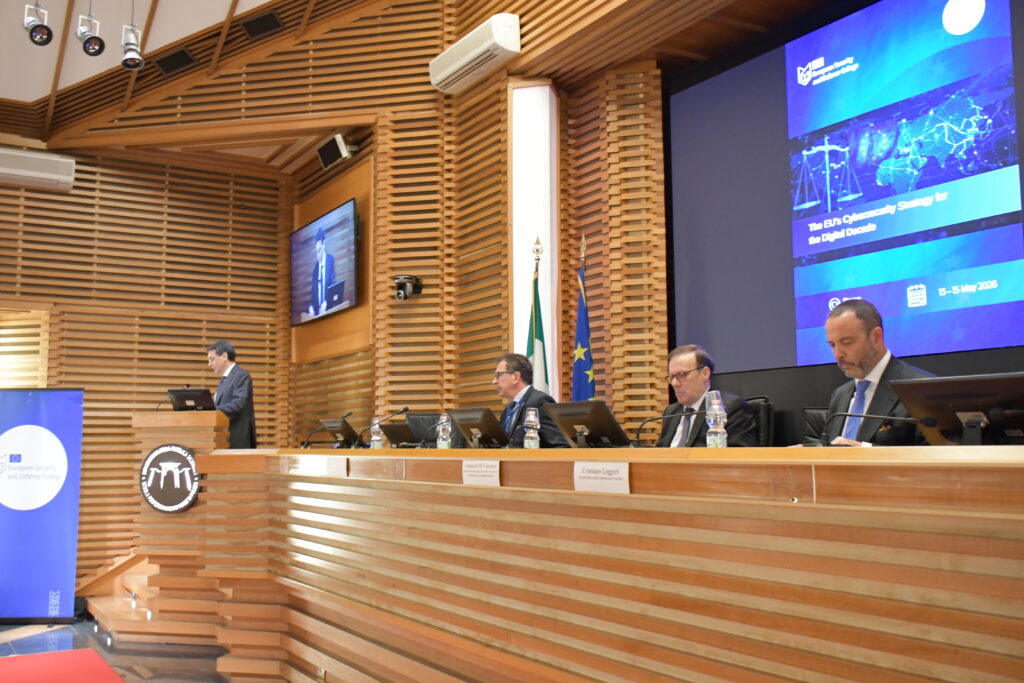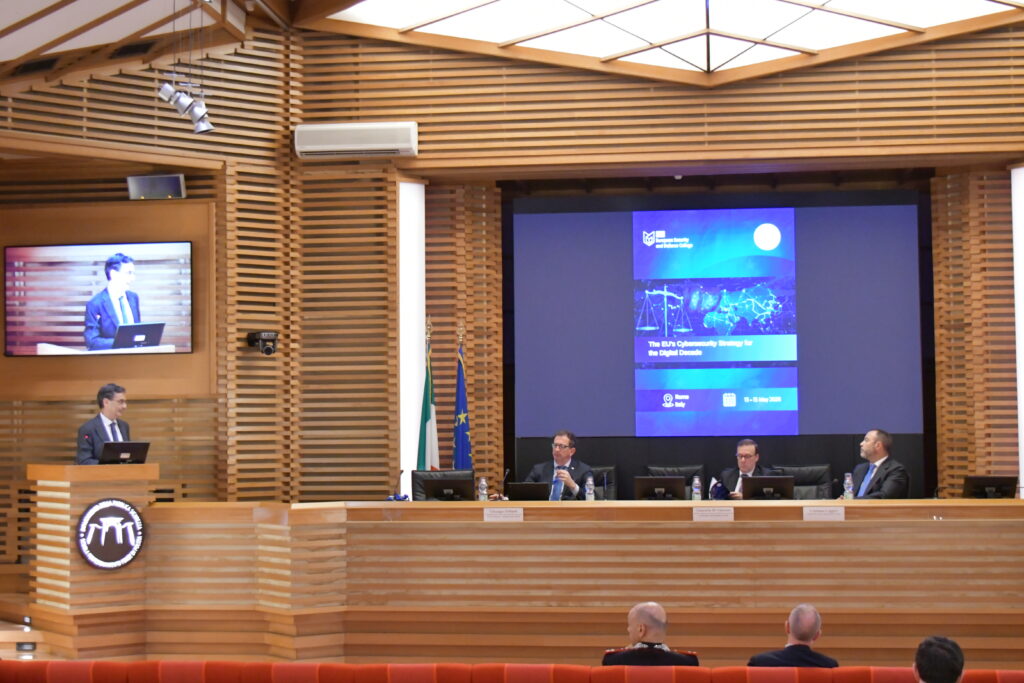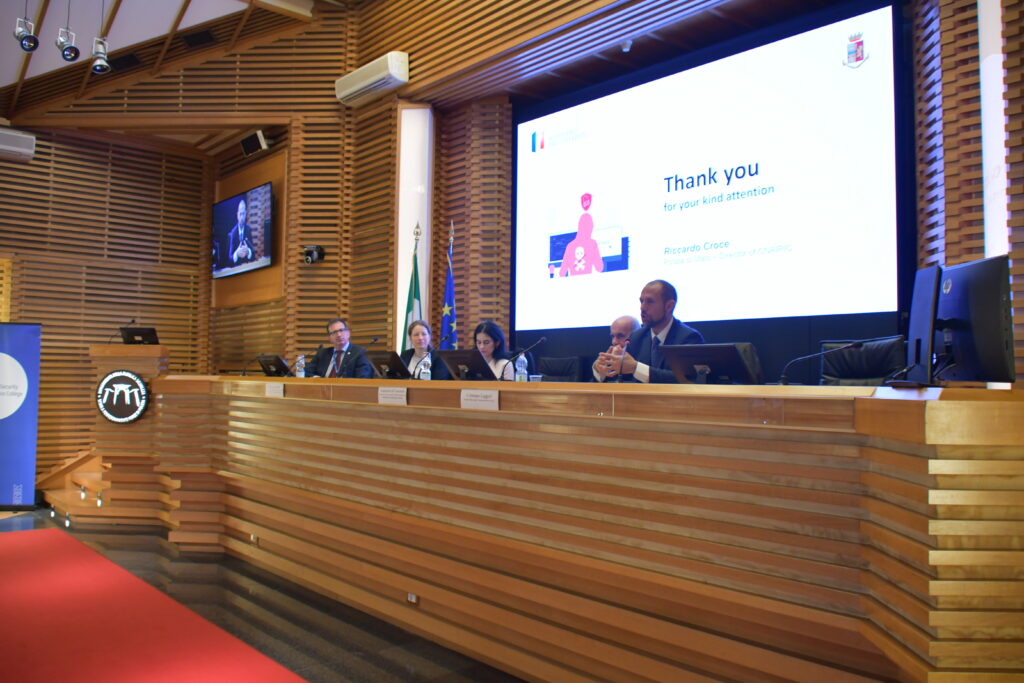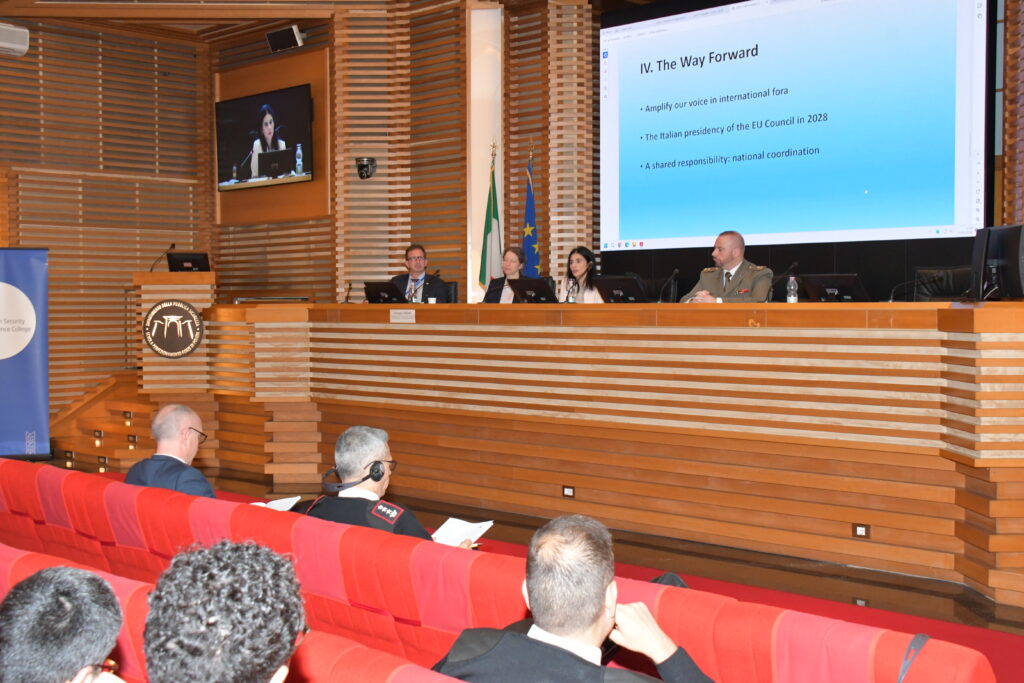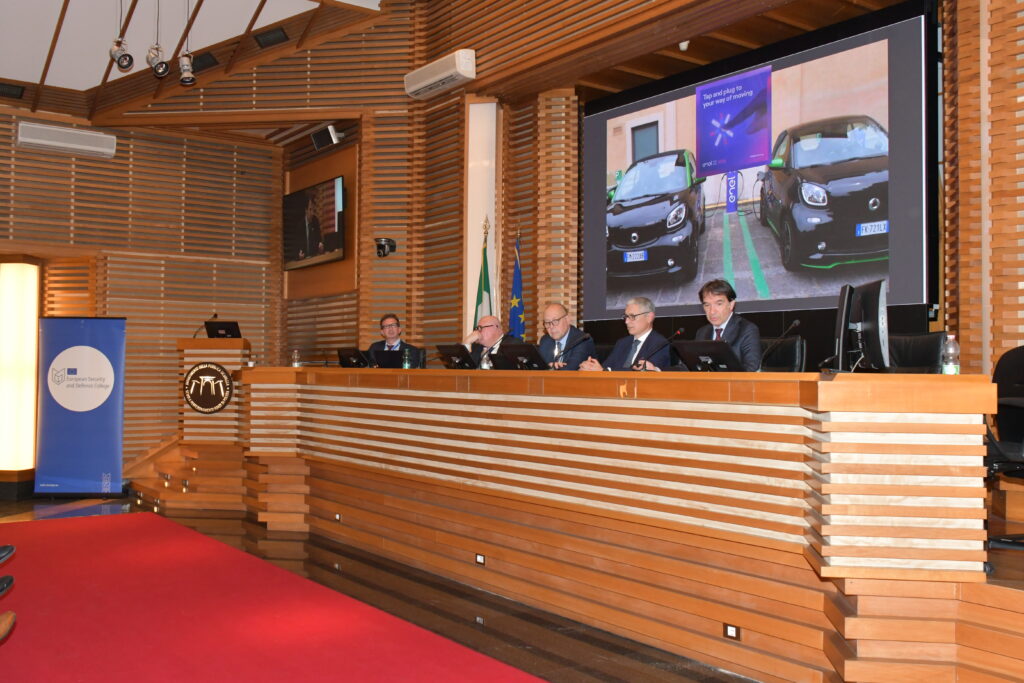

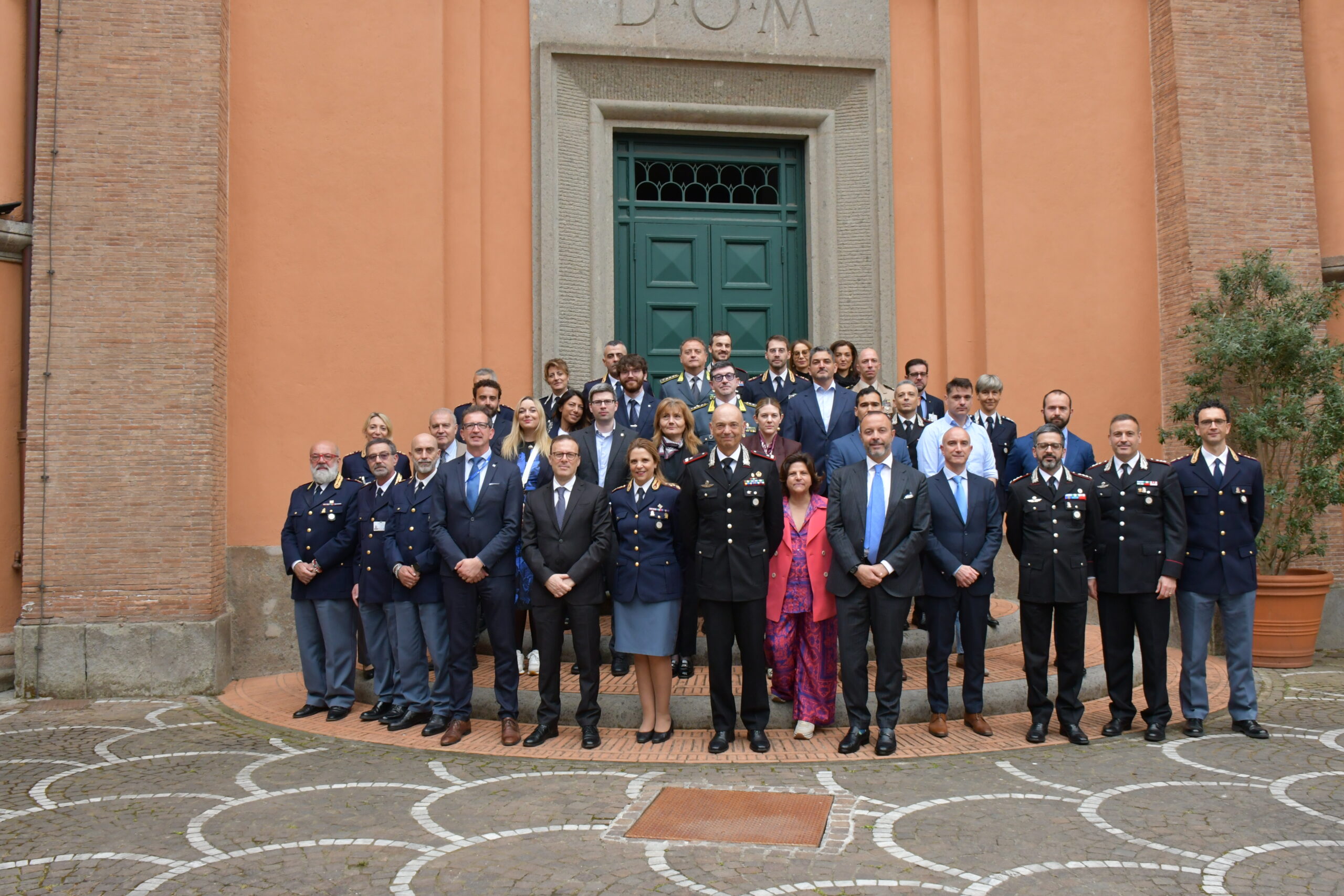
From May 13 to 15, 2026, the Scuola di Perfezionamento per le Forze di Polizia (SFP) hosted the fourth session of the training course on “The EU’s Cybersecurity Strategy for the Digital Decade,” co-organized with the European Security and Defense College (ESDC), a key institution for security training at the European level.
This initiative brought together a high-level group of participants, combining national expertise with a strong international focus. The trainees of the 41st Advanced Training Course, together with several middle management and management grade public officials from various European Union countries, attended the course held in the SFP Conference Hall.
This event is part of the Digital Decade policy, the strategic roadmap through which the European Union aims to achieve full technological transformation and digital sovereignty by 2030.
This ambitious plan is not only aimed at fostering innovation in businesses and public services; it places a fundamental prerequisite at the center: security. While Information and Communication Technologies (ICT) offer extraordinary economic opportunities, they have also left us vulnerable to sophisticated hybrid cyber threats, sometimes orchestrated by state and non-state actors.
With the aim of addressing these challenges, the EU has established a strong policy and regulatory framework based on raising awareness, common protection standards, and strengthening the technical defenses of each Member State.
The opening day, which focused precisely on the need for a coordinated response, was introduced by National Police Dirigente Generale Vincenzo Modeo, Director of the Scuola di Perfezionamento per le Forze di Polizia. In his opening remarks, the Director underlined that the complexity of today’s challenges makes any isolated defense obsolete and emphasized that only through concrete, day-to-day international cooperation is it possible to build a truly resilient digital shield.
This event, held in Rome, has highlithed that cybersecurity is no longer a purely technical issue, but a cornerstone of national and European security. The capacity to understand and analyze the Digital Decade guidelines and to invest in joint training for law enforcement agencies represents the true challenge for future cybersecurity strategies: an essential step toward preventing threats, protecting sensitive data, and contributing to the preservation of democracy in a world that is now irreversibly interconnected.